Compare the Sahrawi Arab Democratic Republic’s limited, data-constrained economy with North Africa’s larger national markets. Understand governance, trade access, resource factors, and due-diligence considerations before making regional business assumptions.
The Sahrawi Arab Democratic Republic (SADR) cannot be compared directly with Morocco, Algeria, or Tunisia using standard national economic rankings. Its measurable economic data are limited, while most of Western Sahara is administered in practice by Morocco and the territory’s final status remains unresolved.
For a market, sourcing, or investment decision, the key issue is not finding a single GDP figure. It is separating territorial administration, available economic evidence, trade procedures, and political-risk exposure. Market-intelligence subscriptions, legal review, and regional advisory services may be worth considering when a decision involves contracts, supply chains, permits, or resource-linked activity.
At a Glance
- SADR has limited comparable economic data, so national GDP-style comparisons can be misleading.
- North African national markets generally have more established systems for banking, taxation, customs, investment regulation, and macroeconomic reporting.
- Western Sahara-related activity requires added due diligence because legal status, stakeholder expectations, and political conditions may affect risk.
| Decision Factor | SADR / Western Sahara Context | Established North African National Markets |
|---|---|---|
| Economic data | Limited data specifically attributable to SADR-administered areas; not directly comparable with national datasets. | More formal macroeconomic reporting and national-level economic measurement. |
| Banking and currency access | Requires case-by-case verification based on the activity, location, and counterparties involved. | National banking, taxation, and currency systems are generally more established. |
| Trade administration | Customs, permits, and trade treatment may require careful review due to the unresolved territorial context. | National customs and investment-regulation frameworks are more clearly structured. |
| Infrastructure and logistics | Physical activity may be linked to Moroccan-administered territory, but control should not be treated as settled legal status. | Transport, energy, and digital systems can be assessed through national and country-specific research. |
| Investment and reputational risk | Potentially elevated where resources, contracts, or supply chains are connected to disputed territory. | Risk varies by country and sector, but research is usually supported by more formal public and commercial data. |
The Short Answer: Why This Is Not a Like-for-Like Economic Comparison
Three points for comparing market potential
First, SADR is proclaimed by the Polisario Front and is a member of the African Union, but Western Sahara is listed by the United Nations as a Non-Self-Governing Territory with an unresolved final status. Second, Morocco administers most of the territory in practice and proposes autonomy under Moroccan sovereignty, while the Polisario Front supports a referendum that includes independence. Third, these political and administrative realities make a standard country-versus-country economic comparison unreliable.
SADR, Western Sahara, and Moroccan-administered territory: terms that require care
These terms are often used as if they describe the same economic unit. They do not always do so. SADR refers to the entity proclaimed by the Polisario Front. Western Sahara refers to the territory whose final status is unresolved. Moroccan-administered territory describes the practical administration of most of Western Sahara by Morocco. A careful report should state which term applies to each dataset, project, contract, or trade route.
Why conventional GDP rankings can mislead
A reliable current SADR GDP, GDP per capita, inflation rate, or national budget comparable with neighboring national datasets is not available. Treating a partial figure, a territorial estimate, or an externally administered activity as a complete national economy can create false precision. For research purposes, it is better to describe the data limitation directly than to force SADR into a regional GDP ranking.
A Practical Framework for Comparing North African Markets
Market size, population base, and consumer-demand visibility
North Africa commonly includes Algeria, Egypt, Libya, Mauritania, Morocco, Sudan, Tunisia, and Western Sahara, although geographic definitions vary. For country-market analysis, start with the population base and visible consumer demand that can be supported by formal national reporting. For SADR-administered areas, comparable market-size evidence is limited, so commercial demand assumptions need a narrower, evidence-based scope.
Banking, currency, customs, and cross-border payment infrastructure
Banking access, currency arrangements, customs processing, and payment routes are practical entry conditions rather than background details. Major North African economies have more established national institutions for these functions than SADR-administered areas. Before selecting suppliers or signing a procurement agreement, verify the applicable banking pathway, customs treatment, contracting party, and compliance requirements.
Transport corridors, ports, energy networks, and digital connectivity
Infrastructure can shape whether an opportunity is commercially workable, but infrastructure alone does not resolve political or legal questions. A route, port connection, energy facility, or digital network may support activity in or connected to Western Sahara. Businesses should still examine the location of operations, the parties involved, and the terms under which goods or services move across borders.
Data availability and the cost of incomplete decisions
Incomplete data can be manageable for a classroom comparison or an early research memo. It becomes more costly when a company is selecting a trade route, sourcing resource-linked inputs, or assessing a long-term project. In those cases, a market-intelligence service, political-risk report, or regional trade research provider can help organize available evidence, though it cannot remove the underlying uncertainty.
Economic Activity Linked to Western Sahara: Opportunities and Risk Boundaries
Fisheries, phosphates, logistics, renewable energy, and infrastructure context
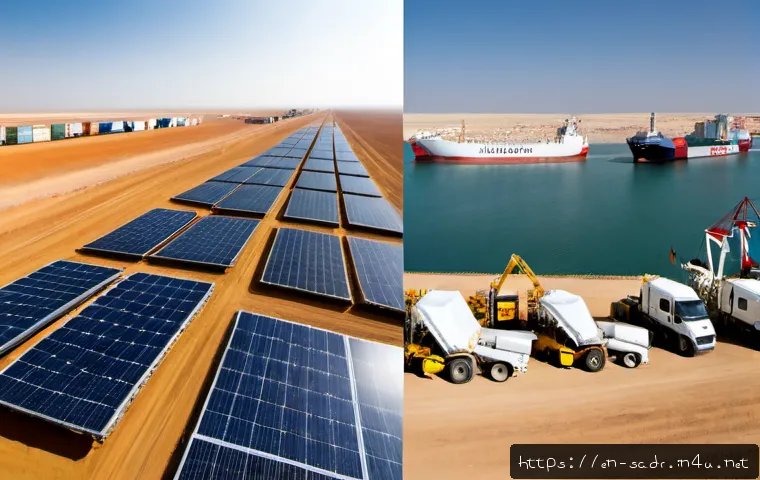
Economic activity connected to Western Sahara can involve fisheries, phosphates, logistics, renewable energy, and infrastructure. These sectors may attract commercial interest because they involve physical assets, transport links, or resource supply chains. However, the presence of activity should not be treated as proof that a project has no legal, political, or reputational considerations.
Why resource and supply-chain claims need legal and stakeholder review
Resource and supply-chain claims should be checked against the project’s location, contract terms, counterparties, applicable laws, and stakeholder expectations. A general regional market report may be useful for initial screening, but it is not a substitute for legal counsel or transaction-specific compliance review. This is especially important where a company must explain its sourcing decisions to customers, investors, partners, or internal risk teams.
Common mistake: confusing physical control with settled legal status
Morocco’s practical administration of most of Western Sahara is an important operational fact. It does not settle the territory’s final political or legal status. A responsible market assessment separates what is operationally accessible today from what remains uncertain about recognition, future diplomatic developments, investment agreements, and trade treatment.
When Businesses and Researchers Should Spend on Due Diligence
Low-stakes academic comparison versus a commercial procurement decision

An academic comparison may reasonably focus on terminology, available data, and the limits of economic measurement. A commercial procurement decision has a different threshold because it may involve payments, contracts, customs handling, supply continuity, and reputational exposure. The larger the commitment, the stronger the case for documented due diligence.
When market-intelligence data, legal counsel, or political-risk consulting adds value
Paid research or advisory support may add value when the decision depends on a specific project, supplier, permit, route, or resource contract. Look for support that clearly distinguishes verified facts, assumptions, and unresolved questions. Political-risk consulting can be useful when management needs scenario-based analysis, while legal advice may be appropriate when assessing contractual or regulatory exposure.
Questions to ask before selecting a regional research provider or advisor
Ask whether the provider identifies its geographic definitions, sources, update practices, and limitations. Check whether it separates Morocco-level data from information specifically linked to Western Sahara or SADR-administered areas. Also ask whether its work addresses trade administration, supply-chain exposure, counterparty screening, and reputational considerations relevant to the decision.
Country-Level Context Across North Africa
Larger diversified markets and more formal reporting systems
North African national markets differ substantially, but major economies in the region generally offer more formal national institutions for taxation, banking, customs, investment regulation, and macroeconomic reporting than SADR-administered areas. That makes country-level comparisons more feasible, not automatically risk-free. Each market still requires its own review.
Resource-led economies, tourism and services hubs, and trade gateways
Regional labels can be useful for a first map of commercial activity, but they should not replace country-specific analysis. A business evaluating resources, services, trade access, or logistics should examine the relevant national framework and the particular sector. The same approach applies even more strongly where Western Sahara is part of the supply chain or project footprint.
Why regional averages should not replace country-specific analysis
A regional average can hide differences in institutions, trade routes, infrastructure, and political-risk exposure. It also cannot solve the data gap around SADR-administered areas. Use regional research for orientation, then move to country-level and transaction-level verification before making a material decision.
Selection Criteria and Comparison Summary
Before choosing a market-data platform, compliance provider, or regional advisory service, check: data confidence, whether Western Sahara is separately identified, the provider’s methodology, trade and logistics coverage, legal-review capability, and reputational-risk analysis. For academic users, transparent sourcing and clear territorial terminology may be the main priorities. For commercial users, supplier screening, contract context, payment routes, customs treatment, and project-specific legal exposure matter more. Review the official guidance and detailed service conditions on the relevant provider’s page before selecting support.
Conclusion
The most responsible comparison is not SADR versus Morocco, Algeria, or Tunisia on a single economic scoreboard. It is a comparison of data availability, institutions, operational access, and unresolved political-risk conditions. Western Sahara-related activity may require more than ordinary country-market research because the legal and stakeholder context can be material. Clear terminology and documented verification are more useful than overly precise-looking estimates.
Useful Information to Keep in Mind
1. Western Sahara’s final status remains unresolved.
2. SADR-specific economic indicators are not reliably comparable with national GDP datasets.
3. Morocco administers most of Western Sahara in practice, but practical control and final status are separate questions.
4. Fisheries, phosphates, logistics, renewable energy, and infrastructure can require additional due diligence when linked to the territory.
Important Limitations
This overview does not determine whether a specific project, permit, supply chain, or contract complies with all applicable laws or stakeholder expectations. It also cannot predict future diplomatic developments, investment agreements, trade recognition, or the economic effect of a change in the territory’s status. Transaction-specific facts should be independently verified.
Frequently Asked Questions
Q1. Is the Sahrawi Arab Democratic Republic economically comparable to Morocco, Algeria, or Tunisia?
A1. Not in a direct national-statistics sense. SADR-administered areas have limited economic data that are not directly comparable with the national GDP, inflation, budget, and investment datasets available for Morocco, Algeria, or Tunisia.
Q2. Why are reliable GDP and investment figures for SADR difficult to find?
A2. Western Sahara’s final status is unresolved, and economic data specifically attributable to SADR-administered areas are limited. This makes it difficult to produce current figures comparable with standard national economic reporting.
Q3. Should a company obtain legal or political-risk advice before sourcing from or investing in Western Sahara?
A3. It may be appropriate when the decision involves a significant contract, resource-linked activity, supply chain, permit, or long-term investment. Legal review and political-risk research can help clarify project-specific questions, but they should be selected based on the actual transaction and applicable requirements.