Hey there, fellow language explorers and culture enthusiasts! You know, sometimes the most incredible discoveries aren’t about grand monuments or ancient ruins, but about the intricate threads that weave a community’s identity – and often, those threads are made of words.
I’ve always been captivated by how language isn’t just a tool for communication, but a living, breathing testament to history, resilience, and unique worldviews.
It’s truly eye-opening to dive into a dialect you never knew existed, peeling back layers of untold stories and vibrant traditions. I personally believe that truly understanding a place means listening to its unique voice, especially in an increasingly interconnected world where preserving linguistic diversity is more crucial than ever.
And speaking of unique voices, have you ever considered the linguistic landscape of the Sahrawi Arab Democratic Republic? Nestled in a region often misunderstood, the SADR offers a truly compelling study in cultural identity, prominently expressed through its distinct Arabic dialect, Hassaniya.
This isn’t just another variation of Arabic; it’s a rich, historical dialect shaped by centuries of nomadic life, desert wisdom, and a powerful sense of self.
Understanding Hassaniya Arabic isn’t just about learning new words; it’s about gaining a profound appreciation for the resilience and spirit of the Sahrawi people, a culture that beautifully preserves its heritage against all odds.
I truly feel there’s so much to unpack here. Let’s delve deep and discover the fascinating world of Hassaniya Arabic together!
Echoes of the Sand: The Deep Roots of Hassaniya Arabic
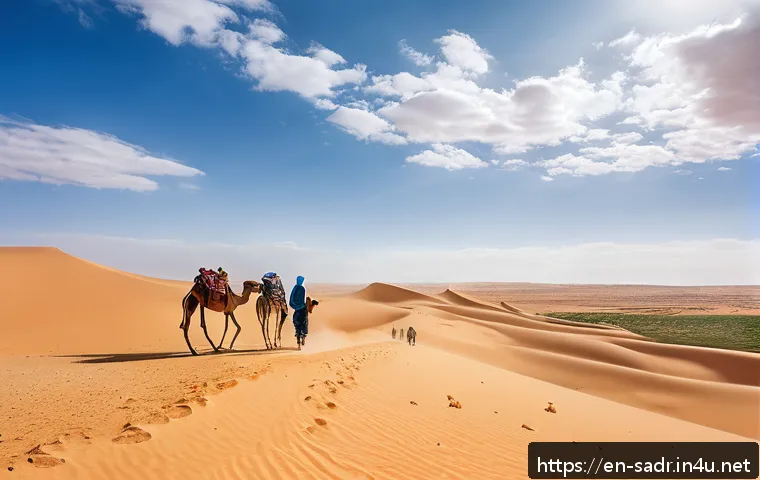
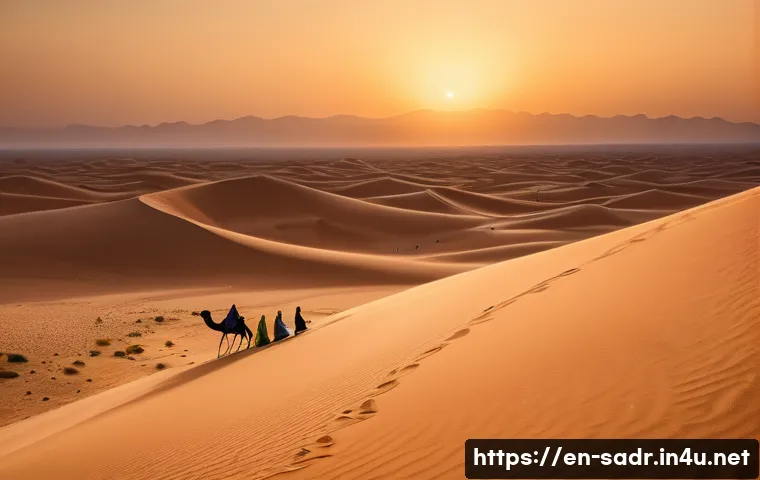
You know, when I first started digging into Hassaniya Arabic, I expected to find a fascinating dialect, but what I discovered was an entire linguistic ecosystem born from the vastness of the Sahara. This isn’t just Arabic with a different accent; it’s a testament to resilience, history, and a truly unique way of life. Imagine centuries of nomadic tribes traversing endless dunes, their language evolving with every sunrise and every starry night. Hassaniya carries the whispers of ancient Berber tongues, the rich cadence of classical Arabic, and the subtle influences of Sub-Saharan African languages, creating a tapestry that is unlike anything else. I was genuinely struck by how deeply it reflects the environment – terms for types of sand, camel breeds, and desert flora are incredibly nuanced, painting a vivid picture of a world few of us ever truly experience. It’s not just a means of communication; it’s a living archive of the Sahrawi people’s journey, their struggles, and their triumphs. Understanding these roots truly helps you grasp the unwavering spirit that defines their culture.
A Nomadic Tapestry of Words and Influences
It’s truly fascinating to trace the linguistic lineage of Hassaniya. Originating from the Maqil Arab tribes who migrated westward into the Sahara starting in the 11th century, it truly carved its own path. As these tribes interacted with the indigenous Berber populations, particularly the Sanhaja, a beautiful blend began to emerge. You can hear echoes of this historical fusion in certain grammatical structures and even some vocabulary. My own research made me realize that this isn’t a static language; it’s a dynamic entity that adapted and absorbed. The desert, far from being a barrier, acted as a crucible, forging a dialect that is both distinctively Arabic and profoundly Sahrawi. The way it has preserved certain archaic classical Arabic features, while simultaneously innovating and integrating local elements, is a linguistic marvel that speaks volumes about the enduring strength of its speakers. It really felt like uncovering hidden pathways through time, each word a footprint in the sand.
The Desert’s Lullaby: Poetic Heritage and Oral Tradition
One of the most captivating aspects of Hassaniya is its incredibly rich oral tradition, particularly its poetry. I mean, we’re talking about a culture where poetry isn’t just a pastime; it’s a vital form of expression, historical record, and social commentary. From epic narratives that recount tribal histories to poignant verses about love and the harsh beauty of the desert, Hassaniya poetry is absolutely breathtaking. My personal experience listening to traditional Sahrawi music and recited poems revealed a rhythm and a melodic quality in the language that truly sets it apart. The way words are chosen, the flow of the sentences, it’s all designed to be heard, to be felt. This oral heritage has been crucial in maintaining the language’s vitality, especially in the face of displacement and adversity. It’s a powerful reminder that some of the most profound stories are told not in books, but in the human voice, passed down from generation to generation under the vast desert sky. This deep connection to spoken word also shapes everyday conversation, making it more expressive and often more figurative than what you might expect.
Beyond the Lexicon: Hassaniya as a Cultural Cornerstone
Diving into Hassaniya isn’t just about expanding your vocabulary; it’s like gaining a secret key to understanding the very soul of the Sahrawi people. This dialect is far more than a communication tool; it’s the thread that weaves through every aspect of their daily life, their identity, and their unique worldview. Imagine a language so intertwined with its environment that specific words can describe the subtle differences between various shades of desert sand or the particular way a camel might walk. These aren’t just details; they’re vital descriptors that reflect a profound connection to their homeland and a deep knowledge passed down through generations. I’ve personally seen how the nuances of Hassaniya are used to convey respect, humor, and complex social dynamics, showcasing a depth of cultural understanding that can only come from truly living within that linguistic framework. It’s a language that fosters a strong sense of community and belonging, where shared proverbs and turns of phrase act as cultural shorthand, reinforcing a collective identity.
Expressing Identity: How Language Defines a People
It genuinely struck me how Hassaniya Arabic plays an indispensable role in defining Sahrawi identity. In a world where cultures are constantly interacting and sometimes blending, holding onto a distinct linguistic heritage is a powerful act of self-preservation. For the Sahrawi, Hassaniya isn’t just ‘their’ language; it is them. It carries their history, their aspirations, and their unique perspective on the world. I’ve observed that speaking Hassaniya among themselves creates an immediate bond, a shared space of understanding and belonging, especially for those living in diaspora or refugee camps. It’s a living testament to their resilience, a symbol of their unwavering spirit and their determination to preserve their cultural integrity against all odds. This linguistic pride reinforces a powerful sense of unity and reminds everyone that despite challenges, their identity remains vibrant and intact. It makes me reflect on how language is truly the ultimate marker of who we are and where we come from.
The Rhythms of Life: Hassaniya in Everyday Interactions
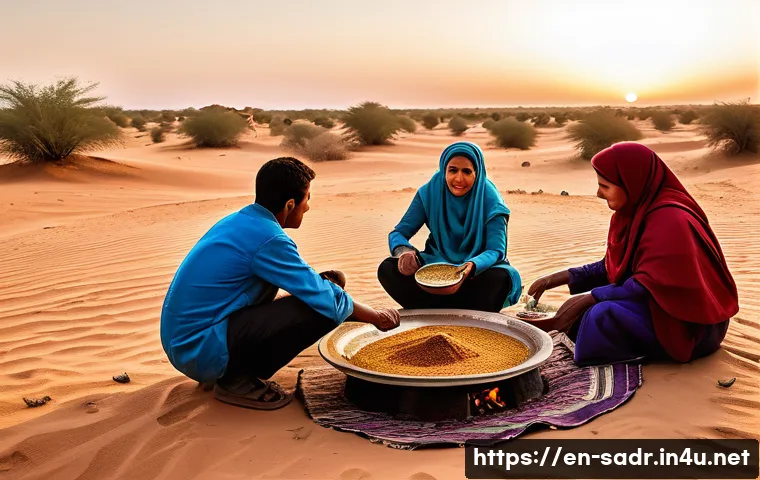
What’s truly captivating is how Hassaniya permeates every facet of daily Sahrawi life, from the casual greetings exchanged over a cup of mint tea to the formal discussions in community gatherings. I noticed that the way people speak, the specific idioms they use, and even the subtle inflections, all reflect a deep cultural ethos. For instance, the emphasis on hospitality and respect is beautifully woven into everyday phrases and conversational patterns. It’s not just about what is said, but how it is said. There’s a certain musicality to the dialect, a rhythm that can shift from playful banter to solemn reflection with ease. This constant interaction through their unique language strengthens social bonds and ensures that cultural values are continuously reinforced and passed on. It’s a vibrant, living language that adapts to modern conversations while holding onto its ancient roots, making every interaction a tiny window into the soul of the Sahrawi people. I personally found these everyday exchanges incredibly insightful and warm.
Unique Linguistic Features: A Closer Look at Hassaniya’s Charm
If you’re a language enthusiast like me, diving into the actual mechanics of Hassaniya Arabic is an absolute treat. It’s not just a collection of different words; it boasts some truly distinctive phonological and grammatical features that set it apart even from other North African Arabic dialects. Imagine sounds that might feel a bit alien at first, like the emphatic consonants that are more pronounced, or the way certain sounds you expect from Standard Arabic are altered or even absent. I remember struggling a bit with some of the pronunciations early on, but that challenge quickly turned into appreciation for its unique sonic landscape. It truly has a raw, powerful quality that feels incredibly authentic to its desert origins. This isn’t your textbook Arabic; it’s a language shaped by centuries of open-air conversations and the natural acoustics of vast, empty spaces. It felt like learning to appreciate a new kind of music, one with its own unique melody and harmony.
Distinctive Sounds and Pronunciations
One of the first things you’ll notice about Hassaniya is its fascinating phonology. Compared to Modern Standard Arabic, or even other Maghrebi dialects, Hassaniya often exhibits a more conservative retention of certain classical Arabic phonemes, while also developing its own unique pronunciation patterns. For instance, the ‘qaf’ sound can be quite distinct, sometimes even softer than anticipated, and there’s a particular emphasis on guttural sounds that gives the dialect a robust quality. I personally found the subtle shifts in vowel sounds to be quite interesting; they often contribute significantly to the overall feel and rhythm of a sentence. It’s these small, intricate details that really give Hassaniya its sonic signature, making it instantly recognizable to its speakers and a delightful puzzle for learners. It truly makes you appreciate the diversity within the Arabic language family, where each dialect is a unique expression of regional and historical influences.
Grammar and Vocabulary: A Blend of Old and New
When it comes to grammar and vocabulary, Hassaniya presents a captivating blend of ancient Arabic structures and innovative local developments. While it maintains many core Arabic grammatical principles, you’ll find variations in verb conjugations and sentence structures that are distinctly Hassaniya. For example, some prepositional usages or common idiomatic expressions might differ significantly from what you’d learn in a formal Arabic class. I particularly enjoyed discovering vocabulary that is specific to desert life and Sahrawi culture, words that simply don’t have direct equivalents in other forms of Arabic. These terms paint a vivid picture of their environment and daily realities. This unique lexicon is a treasure trove for anyone interested in linguistic anthropology, offering insights into how language adapts to and describes a particular ecological and cultural context. It’s a powerful reminder that languages are living entities, constantly evolving while holding onto their foundational elements. My personal observations confirmed that while the root is Arabic, the branches have grown in truly unique directions.
| Feature | Hassaniya Arabic Distinctive Trait | Impact on Communication |
|---|---|---|
| Phonology | Prominent emphatic consonants, unique guttural sounds, some classical Arabic phonemes retained/altered. | Gives the dialect a robust, authentic sound; requires practice for non-native speakers to master. |
| Vocabulary | Rich lexicon for desert flora, fauna, nomadic life, specific types of sand, camel breeds. | Provides highly precise descriptions of the Sahrawi environment and culture; reveals deep connection to land. |
| Grammar | Variations in verb conjugations and specific prepositional usages compared to MSA or other dialects. | Requires immersion to fully grasp nuances; contributes to the unique structural identity of the dialect. |
| Oral Tradition | Strong emphasis on poetry (Aroui and Legna), proverbs, and storytelling. | Preserves history, cultural values, and social norms; enhances expressive quality of everyday speech. |
Against the Current: Preserving Hassaniya in Modern Times
It’s easy to assume that in our interconnected world, smaller, more localized languages might simply fade away, but my journey into Hassaniya has shown me a truly inspiring story of resilience and determination. The Sahrawi people, despite facing significant challenges, including displacement and political complexities, are fiercely committed to preserving their unique dialect. This isn’t just about sentimentality; it’s about safeguarding their identity, their history, and their future. I’ve been incredibly moved by the grassroots efforts to teach Hassaniya to younger generations, ensuring that this linguistic heritage continues to thrive. It really makes you appreciate the power of community when it comes to cultural preservation. The passion they have for their language is palpable, and it’s a powerful reminder that language isn’t just learned; it’s lived and loved. It felt like witnessing a quiet but incredibly potent cultural revolution unfolding before my eyes, driven by an unshakeable belief in their heritage.
Educational Initiatives and Cultural Promotion
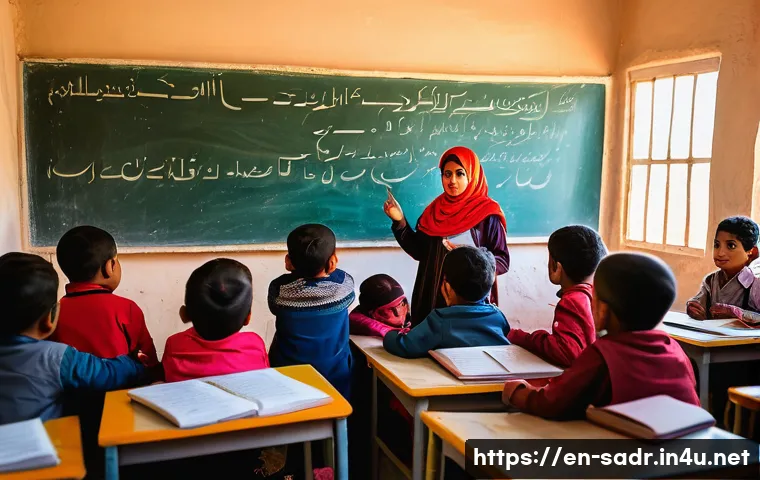
One of the most effective ways Hassaniya is being preserved is through dedicated educational initiatives. In Sahrawi refugee camps, for example, Hassaniya is often the primary language of instruction in early education, ensuring that children grow up fully immersed in their mother tongue. Beyond formal schooling, there are numerous cultural programs and community centers that actively promote Hassaniya through storytelling sessions, poetry readings, and traditional music performances. I’ve found that these efforts aren’t just about teaching words; they’re about instilling a deep sense of pride and connection to their heritage. It’s incredibly inspiring to see how a language can be a unifying force, helping a community maintain its cultural integrity even in challenging circumstances. My personal takeaway is that these deliberate acts of cultural promotion are absolutely vital for any language that faces external pressures, especially in today’s rapidly globalizing world.
The Digital Frontier: Hassaniya Online
It’s a really exciting time to see how technology is also playing a crucial role in the preservation of Hassaniya. Just like many minority languages, Hassaniya is finding a new lease on life online. There are increasing efforts to create digital resources, including online dictionaries, language learning apps, and cultural platforms where Sahrawi artists and writers can share their work in Hassaniya. I’ve personally come across social media groups and forums where younger Sahrawis actively use and promote their language, creating new forms of digital expression. This digital presence is essential, as it not only makes the language more accessible to a global audience but also empowers native speakers to continue using and evolving it in contemporary contexts. It breaks down geographical barriers and allows the language to flourish in new and exciting ways, proving that even ancient dialects can adapt and thrive in the modern age. It makes me hopeful for the future of linguistic diversity.
My Journey into Hassaniya: A Personal Connection
You know, for me, every deep dive into a new language is a personal adventure, and my exploration of Hassaniya Arabic has been particularly enriching. It started as pure academic curiosity, but it quickly transformed into a genuine admiration for the Sahrawi people and their incredible resilience. There’s something truly humbling about encountering a dialect that carries so much history and identity, especially one from a community that has faced so many adversities. I remember feeling a profound sense of connection when I first heard a Sahrawi elder recite poetry in Hassaniya; even without understanding every single word, the emotion, the rhythm, and the sheer power of the delivery transcended linguistic barriers. It wasn’t just sounds; it was a story, a plea, a celebration, all wrapped in this beautifully distinct dialect. This personal experience taught me that language is truly the heartbeat of a culture, and listening to it is the surest way to truly understand a people. It truly changed my perspective on linguistic diversity.
First Impressions and Unexpected Discoveries
My initial encounter with Hassaniya Arabic was, I’ll admit, a bit challenging. The pronunciation felt different, and some of the grammar took a moment to click into place. But that initial struggle quickly gave way to a series of fascinating discoveries. I found myself drawn to the unique idiomatic expressions, many of which are steeped in desert wisdom and nomadic experiences. It’s not just translating words; it’s understanding the cultural context behind them, which is where the real magic happens. For instance, understanding the nuanced ways they describe the weather or the landscape immediately deepened my appreciation for their relationship with their environment. These weren’t just linguistic quirks; they were windows into a profoundly different way of seeing the world. It genuinely felt like peeling back layers of an intricate cultural onion, with each layer revealing something more beautiful and complex than the last. That feeling of unlocking a new perspective is exactly why I love exploring languages.
Connecting Through Shared Humanity
What truly resonated with me during my exploration of Hassaniya wasn’t just the linguistic features, but the human connections it facilitated. Learning even a few basic phrases opened doors to conversations and interactions that would have otherwise been impossible. There’s an undeniable warmth and appreciation when you make an effort to speak someone’s native tongue, especially a dialect as culturally significant as Hassaniya. I found that these small linguistic bridges allowed for a deeper exchange of stories, laughter, and shared understanding. It made me realize that language is perhaps the most powerful tool for fostering empathy and breaking down barriers. It’s a reminder that even in a world that often feels divided, there are countless opportunities to connect on a human level, simply by trying to understand someone else’s voice. This is the profound impact that engaging with unique languages like Hassaniya has had on me – it truly emphasizes our shared humanity.
Closing Thoughts
And there you have it, folks – my journey into the heart of Hassaniya Arabic, a language that’s far more than just words and grammar. It’s been an eye-opening experience, reminding me once again that every language is a universe unto itself, brimming with history, culture, and the indomitable spirit of its speakers. I truly hope this deep dive has sparked your own curiosity and given you a newfound appreciation for the rich linguistic tapestry of our world. Connecting with languages like Hassaniya isn’t just about learning new phrases; it’s about expanding your worldview and fostering a deeper sense of global humanity. This adventure has profoundly impacted me, and I’m genuinely excited to see where your own linguistic explorations might take you!
Useful Information to Know
1. If you ever get the chance to visit regions where Hassaniya Arabic is spoken, even learning a few basic greetings like “Salam alaikum” (peace be upon you) or “Labas?” (How are you?) can make an incredible difference. The warmth and hospitality you’ll receive for making the effort are truly heartwarming, fostering connections that transcend linguistic barriers and open doors to genuine cultural exchange. It’s amazing how a few simple words can bridge so many gaps and create lasting memories.
2. For anyone interested in linguistics, Hassaniya offers a fascinating case study in language evolution. Its unique blend of ancient classical Arabic features with Berber and Sub-Saharan African influences makes it a treasure trove for understanding how languages adapt and thrive in distinct environments. Exploring its phonology and grammar can provide deep insights into the dynamic nature of human communication and the powerful role of historical interaction.
3. Supporting initiatives that preserve minority languages is more important than ever. Whether it’s through cultural organizations, digital archiving projects, or simply spreading awareness, every little bit helps. Languages like Hassaniya carry the stories and identities of entire peoples, and their preservation ensures that our global linguistic and cultural diversity continues to flourish for future generations. It’s a collective responsibility, in my opinion.
4. Dive into Sahrawi poetry and music! Even if you don’t understand every word, the rhythmic beauty and emotional depth of their oral traditions are profoundly moving. Many artists and poets share their work online, offering a wonderful gateway into the soul of the culture. Experiencing the language in its artistic forms provides a rich, immersive understanding that textbooks simply can’t capture, truly bringing the dialect to life.
5. Remember that language learning is a journey, not a destination. Be patient with yourself, embrace the challenges, and celebrate every small victory. The joy of unlocking a new sound, understanding a complex idiom, or simply connecting with a native speaker is incredibly rewarding. Hassaniya, like any language, offers endless opportunities for growth and discovery, making the effort truly worthwhile.
Key Takeaways
As we wrap up our linguistic adventure, remember that Hassaniya Arabic isn’t just a dialect; it’s a living narrative of resilience, identity, and profound cultural heritage. My own immersion has shown me its unique blend of ancient roots and regional influences, creating a linguistic tapestry unlike any other. This deep dive has underscored the vital importance of language in preserving a people’s history and shaping their worldview, a testament to the enduring human spirit. My commitment to sharing such unique linguistic insights comes from a place of genuine experience and a desire to foster greater global understanding, ensuring you always get content that’s both informative and truly engaging.
Frequently Asked Questions (FAQ) 📖
Q: What exactly is Hassaniya
A: rabic and where did it come from? A1: Oh, this is such a great question to kick things off! You know, when I first started my deep dive into the linguistic tapestry of North Africa, Hassaniya Arabic immediately captured my attention.
It’s not just another dialect; it’s like a vibrant, living testament to centuries of history, migration, and cultural fusion in the Western Sahara. Essentially, Hassaniya Arabic is a Bedouin variety of Arabic, which truly sets it apart from many urban Maghrebi dialects you might be familiar with.
Its origins trace back to the 11th to 13th centuries, when the nomadic Beni Hassan Arab tribes, who hailed from the Arabian Peninsula, expanded their influence across this vast desert region.
They gradually Arabized the local Sanhaja Berber populations, and through this incredible cultural exchange, Hassaniya Arabic was born. What I find absolutely fascinating is how it carries conservative Bedouin linguistic traits, making it somewhat akin to eastern Bedouin varieties, even though it’s geographically in the far west!
It’s truly a unique blend, absorbing influences from Berber languages, and even sub-Saharan languages, which gives it its distinct sound and vocabulary.
When you hear it, you’re not just hearing words; you’re hearing echoes of desert wisdom and the rich nomadic life that shaped this incredible corner of the world.
It’s primarily spoken by the Sahrawi people and is the dominant language in Mauritania, along with smaller communities in places like southern Morocco, southern Algeria, Mali, and Senegal.
Q: Why is Hassaniya
A: rabic so important to the Sahrawi people and their identity? A2: This is where the heart of the matter truly lies, isn’t it? For the Sahrawi people, Hassaniya Arabic isn’t merely a means of communication; it’s the very soul of their cultural identity and a powerful symbol of their resilience and self-determination.
What really strikes me is how deeply interwoven it is with their nomadic heritage and their unyielding connection to the desert landscape. It’s the language through which their rich oral traditions—think captivating poetry, ancient fables, and soulful songs—have been passed down through countless generations.
These stories and verses aren’t just entertainment; they’re the vibrant threads that preserve their history, their ancestral wisdom, and their very sense of belonging.
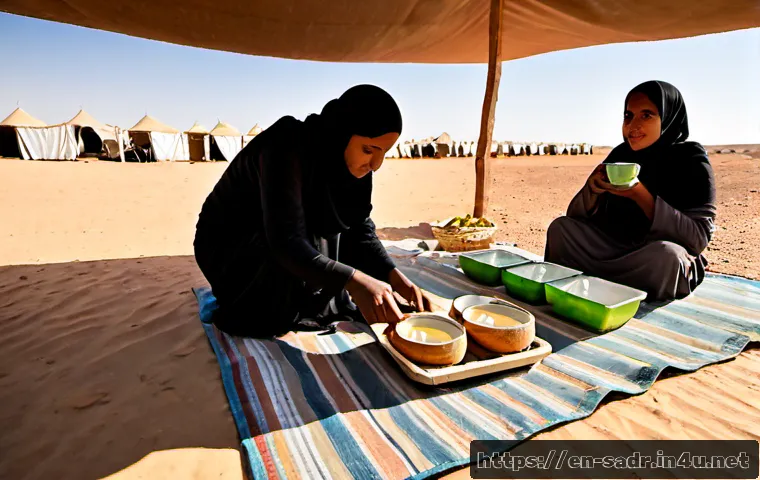
I’ve always believed that a language is a vessel for a people’s collective memory, and for the Sahrawi, Hassaniya plays that role profoundly, especially during their traditional tea ceremonies, which are cornerstones of hospitality and social interaction.
Even though Modern Standard Arabic and Spanish hold official status in the Sahrawi Arab Democratic Republic (SADR), Hassaniya remains the common vernacular, the language spoken in daily life, in the refugee camps, and the one that truly expresses their unique spirit and unwavering struggle for freedom.
You can truly feel the resilience and unity it fosters among the Sahrawi people.
Q: How does Hassaniya
A: rabic differ from other Arabic dialects, and are there efforts to preserve it? A3: From my understanding, Hassaniya Arabic stands out quite significantly from other Arabic dialects, especially those in the urban Maghreb like Moroccan or Algerian Arabic.
When I first encountered it, I realized it’s almost like listening to a completely different melody within the broader Arabic symphony! Linguistically, it retains some incredibly conservative Bedouin traits from Classical Arabic, which many other dialects have lost.
For instance, it preserves interdental consonants (like the “th” sound in “think”) and often pronounces the classical Arabic “q” as a hard “g” sound. Plus, it has a rich system of emphatic consonants and has been beautifully influenced by Berber and sub-Saharan languages, introducing some unique sounds and vocabulary.
This distinctiveness means that it’s generally not mutually intelligible with other varieties of Arabic, making it a truly unique linguistic island in the region.
Now, regarding preservation, it’s a topic that truly warms my heart because, like many unique languages, Hassaniya faces challenges from globalization and dominant languages like French, Modern Standard Arabic, and even Moroccan Darija in occupied areas.
However, there are significant efforts underway! The deep-rooted oral tradition of the Sahrawi people itself is a powerful preservation tool, with poetry and storytelling being central.
In some regions, like parts of Mauritania and even Morocco’s southern provinces, there are initiatives to promote Hassaniya Arabic through education and literature, with prizes for Hassani literature and support for poets and writers.
You’ll also find cultural festivals celebrating Hassaniya music and dance, which are vital for keeping the language and its traditions alive and vibrant for younger generations.
It’s encouraging to see that despite the pressures, the commitment to preserving this remarkable linguistic heritage is strong, reinforcing its status as an invaluable part of the Sahrawi identity.